|
Turks and Caicos Islands
- superb wetlands where the land meets the sea
The Turks and Caicos Islands (TCI) lie SE of the Bahamas and 145 km north of Hispaniola. About 500 sq km of land is divided between 120 low islands and cays situated on shallow banks. Eight of the islands are home to 22,000 people;the majority reside on Providenciales, a major tourist destination.
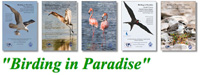
The historically important salinas (salt-pans) at Grand Turk and Salt Cay are now internationally important for birds. They offer some of the best bird-watching in the world for normally shy wild water-birds, which here allow a close approach. Working with its local partner, the Turks & Caicos National Museum, UKOTCF has developed interpreted walking and driving bird-watching trails for local residents and visitors to these important sites. Established in 1991, the Turks and Caicos National Museum is a not-for-profit organisation aimed at recording, interpreting, preserving, and celebrating the history of the Turks and Caicos Islands and its people
The East Caicos, Middle Caicos and North Caicos wetland complex forms one of the best examples of its type in the Caribbean. It is also one of the most natural amongst some 160 wetlands of international importance listed under the Ramsar Convention by the UK Government. On Providenciales, the wetlands have suffered severe environmental degradation, the result of rapid development for real estate and tourism, although areas of value remain through the protected area and National Parks system. An even greater threat to the natural environment is posed by proposals for major developments on the uninhabited islands—prime habitats for unique species such as rock iguana and the remaining breeding sites for turtles.
The trails form part of the work underway to explore the potential for environmentally sustainable development, but further help is needed. The adoption of an eco-tourism approach would help to prevent the destruction of the natural habitat and safeguard biodiversity, cultural heritage and natural beauty of the Islands for present and future. Earlier development of this type was undertaken by UKOTCF, with support from the Darwin Initiative and others, and in partnership with the TCI National Trust and the TCI Government (see Further Information below).
The Turks & Caicos National Trust is a membership–based voluntary organisation established to protect the natural historical and cultural heritage of the Islands.
The Turks and Caicos Reef Fund was established to help preserve and protect the marine environment of the Turks and Caicos Islands - an environment that draws so many visitors to the islands and is critical to the survival of the islands themselves. Its goal is to dedicate 85+% of all funds raised through this effort to marine conservation projects each year. Funds will be generated by selling wristbands and dive tags to visiting divers, and individuals, groups and organizations can apply to it for grants for use in projects that will enhance the marine environment.
about Virtual Tours....
|
 |
 |
|
| click images for larger versions |
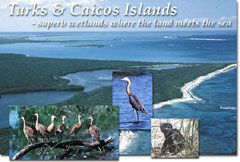
| A superb complex of natural coral reefs, tidal flats, mangroves and marshlands provide a haven for wildlife, and the natural basis of fisheries and tourism. The islands provide a home for at least 14 unique plants, reptiles (including the rock iguana pictured), and an unknown number of invertebrates, as well as the vulnerable reddish egret and West Indian whistling duck (pictured). |
| Photographs courtesy of Michael Gore FRPS & Mike Pienkowski |
|
|
|
|
Further Information
Developing biodiversity management capacity around the Ramsar site in the Turks & Caicos Islands:
|
|