|
South Georgia and the South Sandwich Islands Icy Jewels in the Southern Ocean
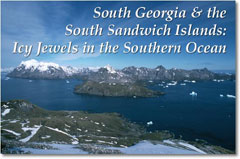
South Georgia lies 1300 km SE of the Falkland Islands, and the South Sandwich Islands (SSI) a further 760 km SE. South Georgia is mountainous with many glaciers, permanent ice covering almost half of its total land area of 3755km2. Part of the old whaling station at Grytviken has been converted into the South Georgia Museum. The South Sandwich Islands consist of an uninhabited 240 km chain of active volcanic islands.
 There are estimated to be 53 million birds on South Georgia. The most numerous bird is the macaroni penguin with more than two million breeding pairs. It is an important nesting site for the largest seabird in the world, the wandering albatross. There are further large seabird colonies in SSI, with chinstrap penguin in vast numbers.
 Licensed commercial fishing for fin-fish, squid and krill takes places in the surrounding seas. Two British Antarctic Survey research stations at Bird Island and King Edward Point undertake marine research to understand the biology of the Southern Ocean and support a sustainable fishery. Much remains to be discovered about the sea-bed communities. The Environmental Management Plan for South Georgia provides a framework for waste management, protected areas and control of alien species. Licensed commercial fishing for fin-fish, squid and krill takes places in the surrounding seas. Two British Antarctic Survey research stations at Bird Island and King Edward Point undertake marine research to understand the biology of the Southern Ocean and support a sustainable fishery. Much remains to be discovered about the sea-bed communities. The Environmental Management Plan for South Georgia provides a framework for waste management, protected areas and control of alien species.
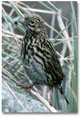
Rats and mice - inadvertently brought to the island by sealers and whalers from the late 1700s onwards - have had a devastating effect on the island's ecosystems. In particular, huge numbers of ground-nesting birds, including the endemic South Georgia Pipit and South Georgia Pintail, are eaten alive and their eggs and chicks are predated. In 2010, the South Georgia Heritage Trust commenced the first phase of a seven-year project to eradicate invasive rats. The only effective way to eradicate the rodents on an island the size of South Georgia is to spread a rodenticide in pellets by helicopter. The second phase of the operation to clear the remainder of the island will run from 2013 to 2015. Further monitoring will be undertaken throughout the island in 2016 and 2017 to ensure that no rats have survived.
In 2011, after wide public consultation, The Government of SGSSI confirmed that it would remove the reindeer, introduced a century before, which were causing major damage to the natural ecosystem.
 It is important that the UK Government provides modern conservation legislation to support the Plan. Visitors from cruise ships are increasing but regulations are in place to ensure minimum disturbance. It is important that the UK Government provides modern conservation legislation to support the Plan. Visitors from cruise ships are increasing but regulations are in place to ensure minimum disturbance.
|
 |
 |
|
|
| click images for larger versions |
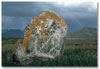
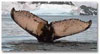
| The South Georgia pipit (pictured) is unique to the island. Several seal species breed on the 2 island groups and whales (humpback pictured) are frequently seen offshore. Despite a very limited number of flowering plants, there is great diversity in the mosses and lichens (pictured), many found nowhere else in the world. |
| Photographs courtesy of Pete Bucktrout, R I Lewis-Smith, David Wilson (British Antarctic Survey) |
|
 |
|
|
|
|