|
St. Helena
Fragments of a Lost World
St. Helena, 122 sq km, has a resident population of about 5000. It lies 1,960km from the SW coast of Africa and 2,900km east of South America. The nearest land is Ascension Island, 1300 km north. The Environmental Conservation Section of the St Helena Government Agriculture and Natural Resources Department has been the lead agency in environmental conservation. Non-governmental organisations (NGOs), the St Helena Nature Conservation Group and the Sandy Bay Environmental Centre, are increasingly active in the development of conservation and education.
Massive destruction of native plants and animals followed the Island's discovery in 1502. Deliberate introductions of alien plants and animals have caused further declines of habitats and species. Remaining, scattered patches of native vegetation are too small to have preserved all the plants of the varied habitats. Six species have become extinct, and several survive only in cultivation. Small population sizes and alien species are the greatest threats to the survival of St Helena's land plants and animals. Reasons for the decline of wirebirds are being studied.
The activity most affecting the marine environment is fishing. St Helena's unique fishes are not important commercially. However, fishing effort directed at lobsters, glasseyes and groupers has impacted the inshore nutrient cycling systems. Quotas are now set for the grouper fishery after recognition of a danger of over-fishing.
The St Helena National Trust acts for the protection, enhancement and promotion of St Helena’s unique environmental and cultural heritage. The Trust’s activities include restoring the island’s fragile Gumwood forests, conserving the endemic Wirebird, promoting the protection of the historic buildings and fortifications, and educating and training local people.
|
 |
 |
|
|
| click images for larger versions |
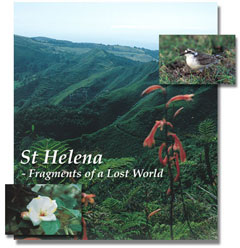
| St Helena's isolated position in the South Atlantic has given rise to an unusual and remarkable land and marine flora and fauna. Of the 60 known native species of plant, 45 occur nowhere else (including the white ebony flower, pictured). Of 1100 land invertebrates, 400 are unique to St Helena. At least six unique land birds once occurred on St Helena, only one (the wirebird, pictured) survives today. Ten shore fishes are found only around the island, and 16 more are found only here and at Ascension. |
| Photographs courtesy of Rebecca Cairns–Wicks. |
|
|
|
|
|
|